
Scrap metal is everywhere — in old appliances, construction offcuts, car parts, roofing sheets, and industrial machinery. Yet many people don't fully understand what happens to metal once it's collected, sorted, and processed. Understanding this process not only helps you make smarter disposal decisions but also shows why recycling metal matters for both the environment and the local economy.
This guide breaks down how scrap metal recycling actually works, from collection to reuse, and what to keep in mind if you're planning to recycle metal from your home, worksite, or business.
Metal is one of the few materials that can be recycled almost indefinitely without losing its core properties. Unlike plastic, which degrades in quality each time it's processed, steel, aluminium, copper, and brass can be melted down and reformed repeatedly.
Recycling metal instead of mining new ore:
Before recycling begins, it helps to understand the two broad categories of scrap metal, since each is processed differently.
These contain iron and are magnetic. Common examples include steel beams, iron pipes, car bodies, and old machinery. Ferrous metals are generally lower in value but are recycled in huge volumes due to their widespread use in construction and manufacturing.
These don't contain iron and aren't magnetic, which makes them more resistant to rust and generally more valuable. Examples include copper wiring, aluminium cans, brass fittings, and stainless steel. Because of their higher resale value, non-ferrous metals are often sorted separately and handled with extra care.
The process starts with gathering scrap metal from households, construction sites, demolition projects, workshops, and vehicles. This can involve drop-offs at a recycling yard or scheduled pickups for larger loads.
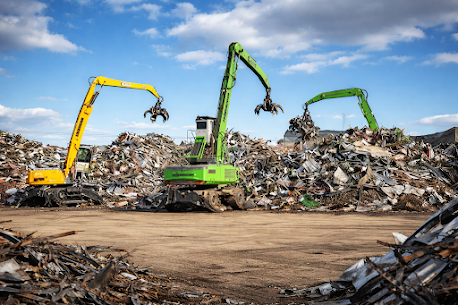
Once collected, metal is sorted by type. This is typically done using a combination of magnets (to separate ferrous from non-ferrous metals), visual inspection, and increasingly, automated sensor-based sorting technology that can identify metal grades with high accuracy.
Larger items like car bodies or structural steel are often shredded or compacted to reduce their size, making them easier to transport and melt down efficiently.
Sorted and processed metal is sent to furnaces where it's melted at high temperatures. Different metals require different melting points, which is why accurate sorting earlier in the process is so important.
Melted metal often needs further purification to remove impurities, coatings, or alloy elements that shouldn't be part of the final product.
Once purified, the molten metal is cooled and formed into bars, sheets, or other standard shapes ready to be sent to manufacturers, who use it to create new products — from car parts to building materials to household appliances.
Most people are surprised by just how much metal around them qualifies for recycling, including:
If you're unsure whether an item is recyclable, it's always worth checking with a local recycler before throwing it out.
Not all recycling services are equal. When choosing where to take your scrap metal, consider:
Businesses generating regular scrap, such as builders, manufacturers, and demolition contractors, benefit especially from partnering with a recycler who can offer scheduled pickups and consistent pricing over time.
If you're searching for a reliable scrap metal recycler gold coast locals trust, it's worth looking for a service with a strong track record in both residential and commercial collections. ADRIAN'S Metal Recyclers is one such option in the region, known for straightforward pricing and handling everything from small household loads to large commercial and industrial scrap.
Scrap metal recycling plays a far bigger role in sustainability than most people realise. By understanding how the process works — from sorting to melting to reforming — you can make more informed decisions about how you dispose of old metal items, whether you're clearing out a garage, wrapping up a renovation, or managing ongoing waste from a business. Choosing a responsible local recycler ensures that metal gets a second life instead of ending up in landfill.