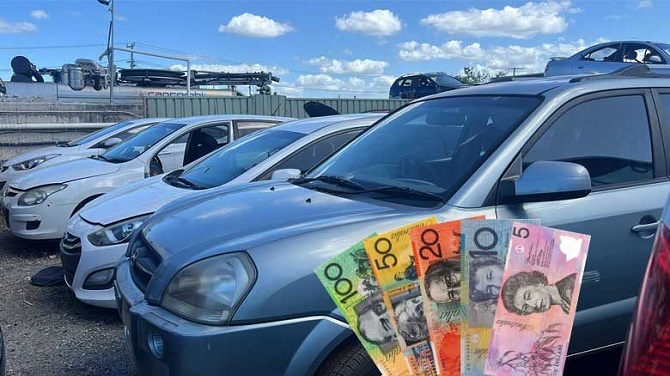

The vehicle removal industry operates on a set of economic and logistical principles that most car owners never encounter until they need to dispose of a vehicle themselves. Behind what looks like a simple pickup service is a structured process involving valuation methodology, environmental compliance, and material recovery. Understanding these mechanics offers a clearer picture of how end-of-life and unwanted vehicles move from a driveway to their next stage of use.
Every vehicle eventually reaches a point where it's no longer economical to repair, roadworthy, or wanted by its owner. Traditional resale channels — dealership trade-ins, private listings, or auctions — are built around vehicles that still hold functional or market value. Vehicle removal services exist to handle the segment of the market that falls outside this range: cars that are damaged, non-running, unregistered, or simply obsolete.
This makes the industry a critical link in the automotive lifecycle, connecting individual vehicle owners with dismantlers, recyclers, and parts resellers who extract remaining value from a car long after it has stopped being driveable.
For more details on vehicle assessments and collection options, visit https://www.carremovaladelaide.com.au/.
Unlike a straightforward retail sale, valuing an end-of-life vehicle involves assessing several interacting variables simultaneously:
This layered valuation approach explains why two seemingly similar vehicles can receive noticeably different assessments.
A typical vehicle removal transaction moves through several distinct stages:
Owners submit vehicle details — make, model, year, condition, and mileage — which providers use to generate an initial estimate based on current market data.
Many providers verify condition through an on-site inspection or photo submission, cross-checking the vehicle against the preliminary assessment to finalise terms.
Ownership transfer requires proof of identity and registration documents. Reputable operators also handle de-registration with relevant transport authorities, ensuring the transaction meets regulatory requirements.
Once terms are agreed, the vehicle is collected — often using flatbed or tow transport — and moved to a dismantling or recycling facility.
At the facility, usable parts are removed for resale, fluids and hazardous materials are extracted for safe disposal, and the remaining shell is processed for metal recycling. This stage is where environmental compliance becomes especially relevant, as improper handling of fluids and components can result in regulatory penalties.
Vehicle dismantling is subject to environmental regulations governing the disposal of oils, coolants, batteries, and refrigerants. Licensed facilities are required to follow specific protocols to prevent soil and water contamination. This regulatory layer distinguishes legitimate vehicle removal operations from informal scrap collection, and it's one reason vehicle condition and compliance history matter when selecting a provider.
The vehicle removal industry is sensitive to a number of external economic conditions:
These factors mean that valuations aren't static — they reflect a constantly shifting set of market conditions rather than a fixed pricing structure.
Several operators serve the Adelaide market, each applying their own valuation models and logistics networks. Car Removals Adelaide operates within this space, offering assessments and collection services across a range of vehicle conditions. For owners researching how this industry functions, understanding the underlying valuation and compliance processes — rather than focusing solely on marketing claims about the best cash for cars adelaide has to offer — provides a more accurate basis for comparing providers.
The vehicle removal industry reflects a more sophisticated process than it first appears, shaped by material economics, regulatory compliance, and logistical considerations. For vehicle owners, understanding these underlying mechanics offers a more informed perspective on how end-of-life vehicles are assessed and processed, beyond the simplicity of a pickup and payment transaction.



20240419071523.jpg)